Indoor mold in a dry Front Range climate almost always points to a water event, such as a roof leak, a burst line in a cold snap, a failed condensate pan or a plumbing chase that sweats. Call the number on this page to be connected with a local mold company in Louisville.
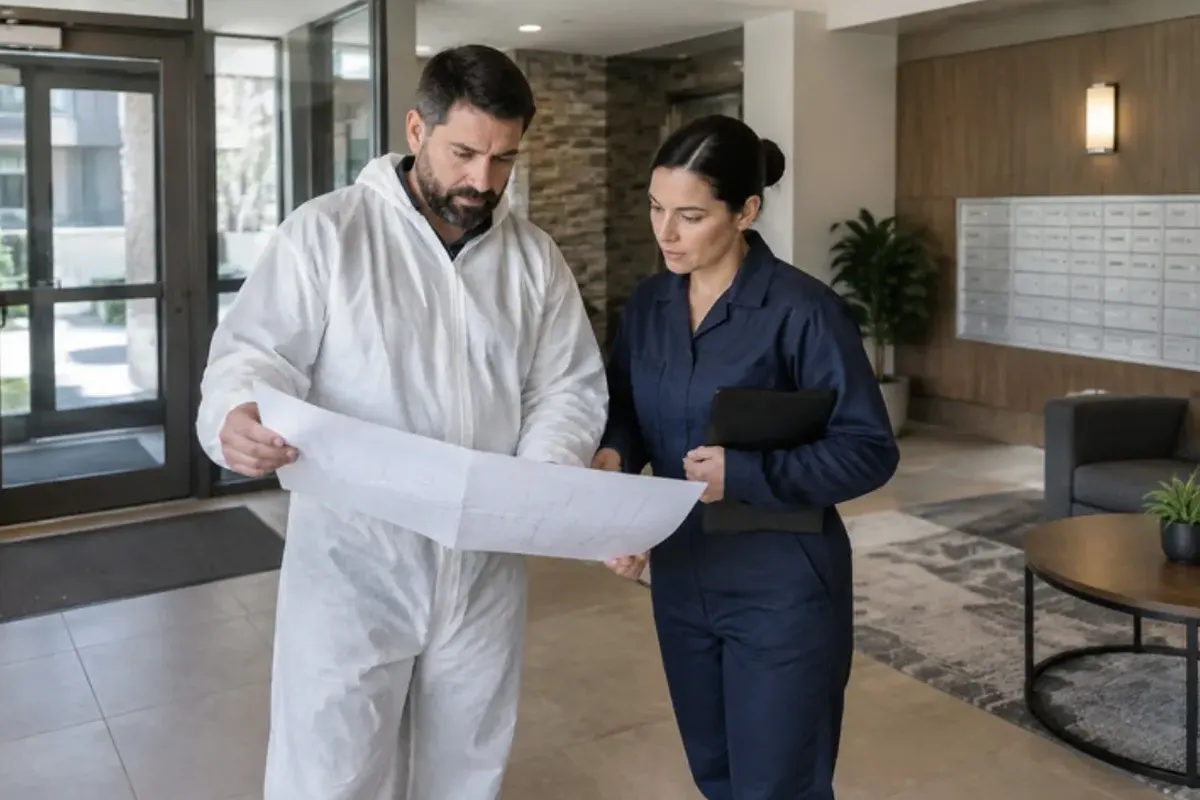
The quiet places
Mold in commercial buildings often hides above drop ceilings, inside plumbing chases, behind vinyl wall covering and under flooring in back rooms. A visible spot may be only the edge of it. Companies use moisture meters and small inspection openings to see how far damp materials extend before they quote.
Tenant build-outs
Remodels sometimes bury old moisture under new finish. Vinyl wallcovering, tight cabinetry and new flooring can trap dampness against drywall. If a suite was recently renovated and a smell followed, ask the company to check behind the new materials, not just the visible surface. Ask for the findings in plain language you can pass to your own manager or landlord.
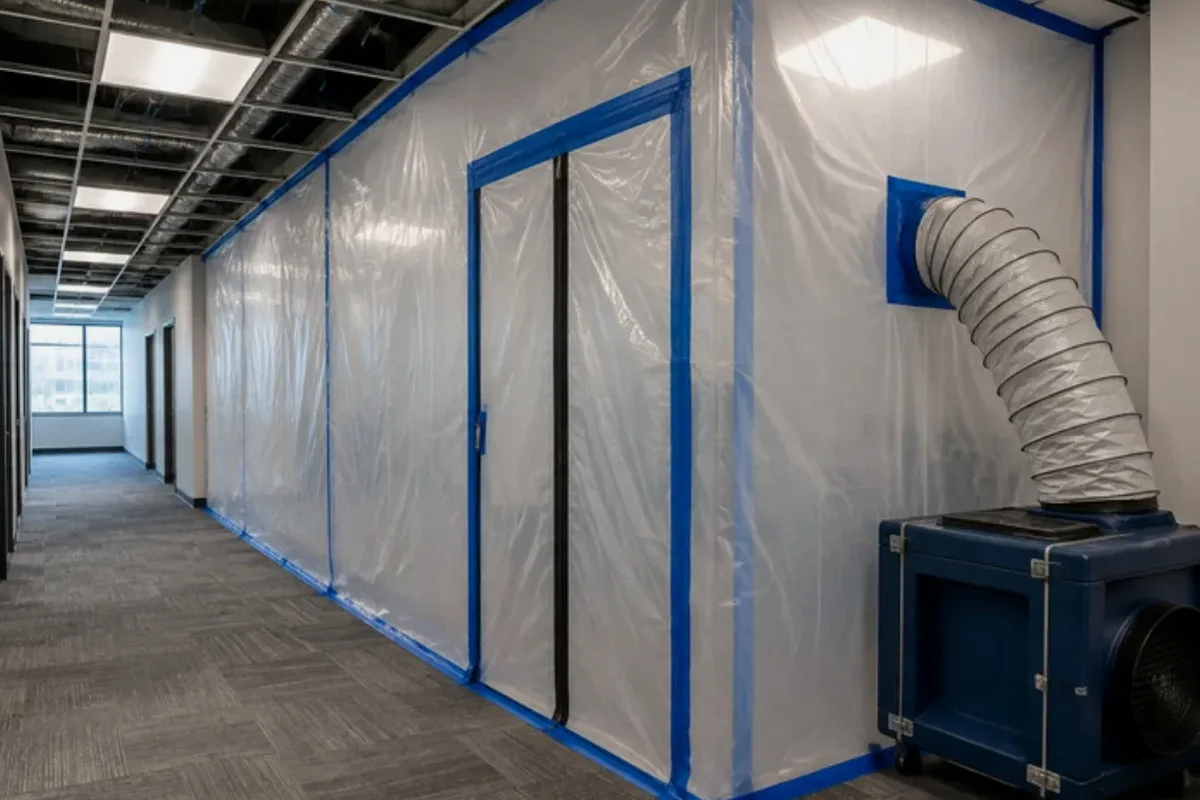
Working around occupancy
Evening or weekend work can protect operations, but it may change scheduling and labor. A restaurant, clinic or retail store that cannot close affects how the company phases the job. Say what your hours are and what disruption you can tolerate when you ask for quotes. Owners in Louisville often find phasing the work saves more than it costs.
Who handles what in Louisville
There is no Colorado mold license to look up. Cities run their own contractor licensing (Denver, for example, issues its own and doesn't accept other jurisdictions' licenses), so ask which one applies to your address.
If the job grows into replacing drywall, cabinets or framing, ask whether the rebuild needs a permit from the Louisville Building Safety.
If you rent, give the landlord written notice of the leak or mold. Colorado's habitability law covers mold tied to dampness, and Colorado Legal Services explains the response times.
Calls from Louisville are often matched with companies that also cover Lafayette, Broomfield and Westminster.
Questions for a company
- Do you hold the local contractor license for commercial work in Louisville?
- How will you separate the work area from occupied space?
- Who writes the scope and who verifies the finish?
- What happens to HVAC serving the area?
Details like these separate a vague bid from one you can rely on.
When to stop and call
If growth covers a wide area, sits in more than one room, returns after cleaning or involves shared air handling, pause any DIY cleanup. A local company can describe the scope and sequence, and you can then decide with owners, tenants or managers what to do.
Commercial Mold Remediation questions in Louisville
How fast should wet materials be dried?
What happens to ceiling tile and carpet?
Can mold spread through the HVAC system?
What humidity should a commercial space aim for?
More mold services in Louisville
Commercial Mold Remediation nearby
Helpful guides
Sources
Last updated: