Mold in a furnace, duct run or evaporative cooler is a moisture problem inside the air system, and cleaning the surface without fixing the water source tends to bring it back. Denver homes see this with swamp coolers, furnace humidifiers and basement ductwork. Call the number on this page to be connected with a local mold company in Denver.
What this service covers
Denver is dry outdoors, so mold in the air system almost always has a local water source. Metro Denver Economic Development, citing NOAA, lists average afternoon humidity at 43 percent. Inside a house, three things change that: an evaporative (swamp) cooler, a furnace humidifier, and ductwork that sweats or leaks, often in a basement or crawl space. A local mold company can inspect these parts, clean or replace what is affected, and point out the moisture source.
Why swamp coolers are a common culprit
The U.S. Department of Energy says evaporative coolers add moisture to indoor air, suit only low-humidity areas, and need regular upkeep: checking pads, filters, the reservoir and pump, plus a full cleaning each season. A cooler left wet through a Denver summer or closed up wet for the winter can grow mold on pads and in the cabinet. Humidifiers on a forced-air furnace can do the same if the pan stays damp.
When to call
- A musty smell that starts when the furnace or cooler runs.
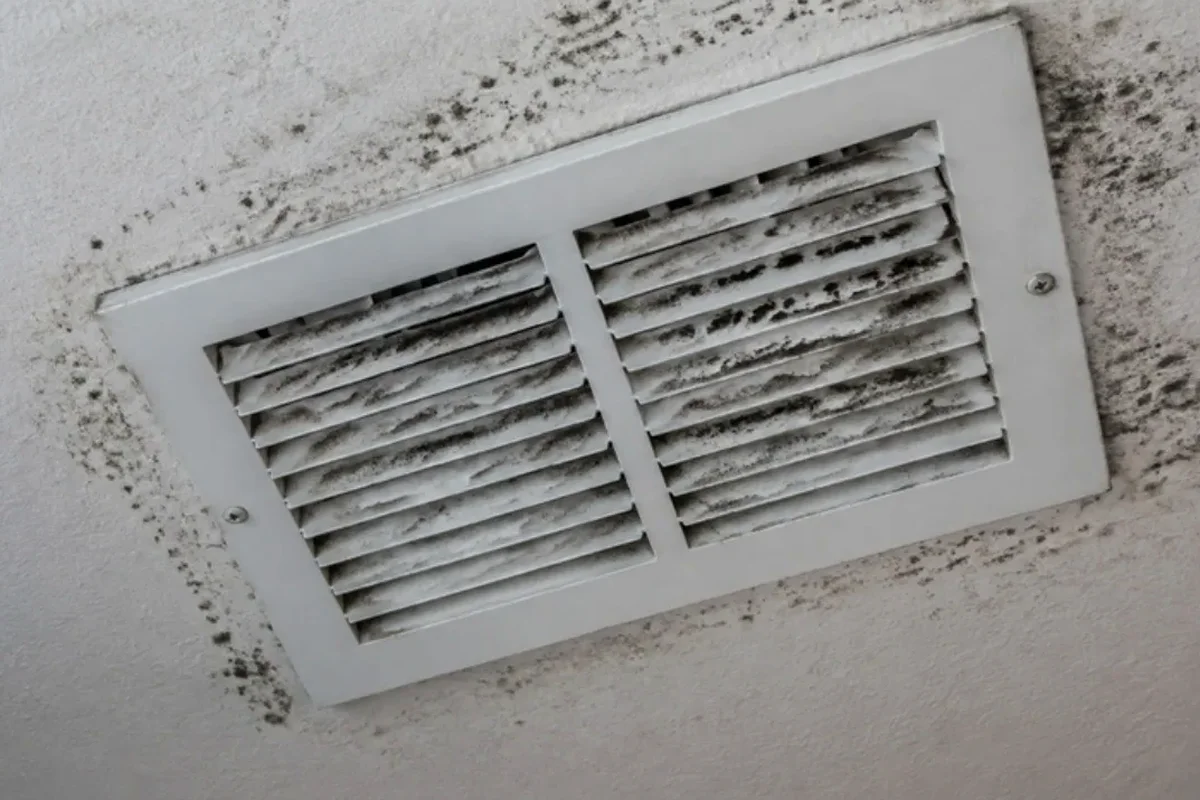
- Dark growth you can see at a register, on a cooler pad or at the furnace cabinet.
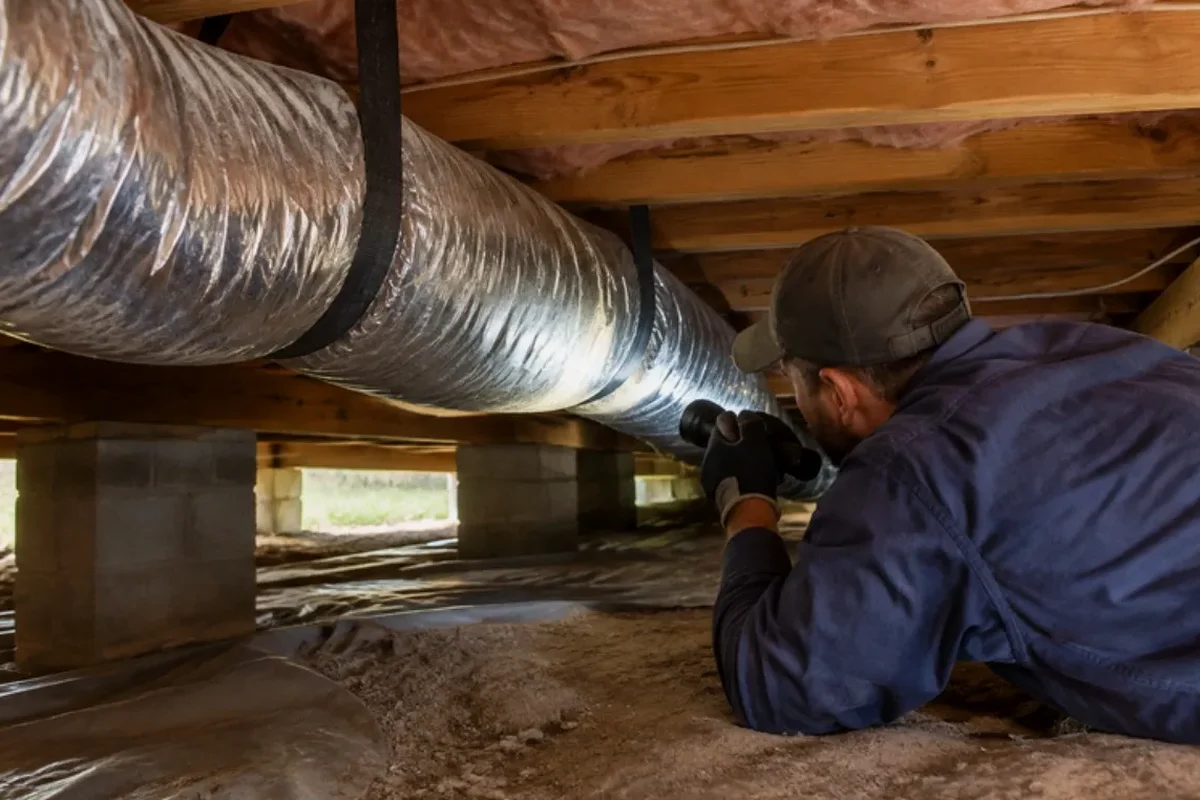
- Ductwork in a damp basement, or after a leak, flood or burst pipe near the system.
- Condensation on duct surfaces or a dripping humidifier line.
EPA treats about 10 square feet as the size many people can handle themselves, but ductwork is hard to see and reach, so most homeowners hand it off. If anyone in the home has health concerns, talk with your doctor.
What happens
The company looks at the equipment and the surrounding space, finds where moisture is entering, and sets a plan. Typical steps are containing the work area, shutting the system down, cleaning or removing affected components, drying, and replacing parts such as cooler pads. Porous insulation inside ducts is often replaced instead of cleaned.
What it costs
A Denver cost guide (Angi) lists HVAC and duct mold cleaning at $3,000 to $10,000 per project. Size, access and whether duct sections must be replaced move the number. Ask for a written scope that names the moisture fix.
Hiring check
Colorado has no state mold license, so there is no state license to look up. Contractor licensing is local: the City and County of Denver issues its own contractor licenses and does not accept licenses from other counties or states. If the job involves replacing furnace or duct parts, ask who holds the local contractor license and whether a permit applies; Denver Community Planning and Development issues building permits.
Renters
Colorado's warranty of habitability can cover mold associated with dampness, after you give your landlord written notice. In Denver, the Denver Department of Public Health & Environment takes residential housing complaints.
Furnace, Duct & Swamp Cooler Mold questions from Denver homeowners
Can I just clean the swamp cooler myself?
Why does my furnace smell musty in Denver's dry air?
How much does duct mold cleaning cost in Denver?
Does the call cost anything?
Related mold services in Denver
Helpful guides
Furnace, Duct & Swamp Cooler Mold in nearby cities and towns
Arapahoe County
Jefferson County
Adams County
Douglas County
Boulder County
Broomfield County
Weld County
Gilpin County
Clear Creek County
Sources
- How Much Does Mold Remediation Cost in Denver, CO? | Angi
- Evaporative Coolers | U.S. Department of Energy
- A Brief Guide to Mold, Moisture and Your Home | EPA
- Contractor Licensing | Denver Community Planning and Development
- State requirements round-up | R&R Magazine
- Climate | Metro Denver Economic Development
Last updated: