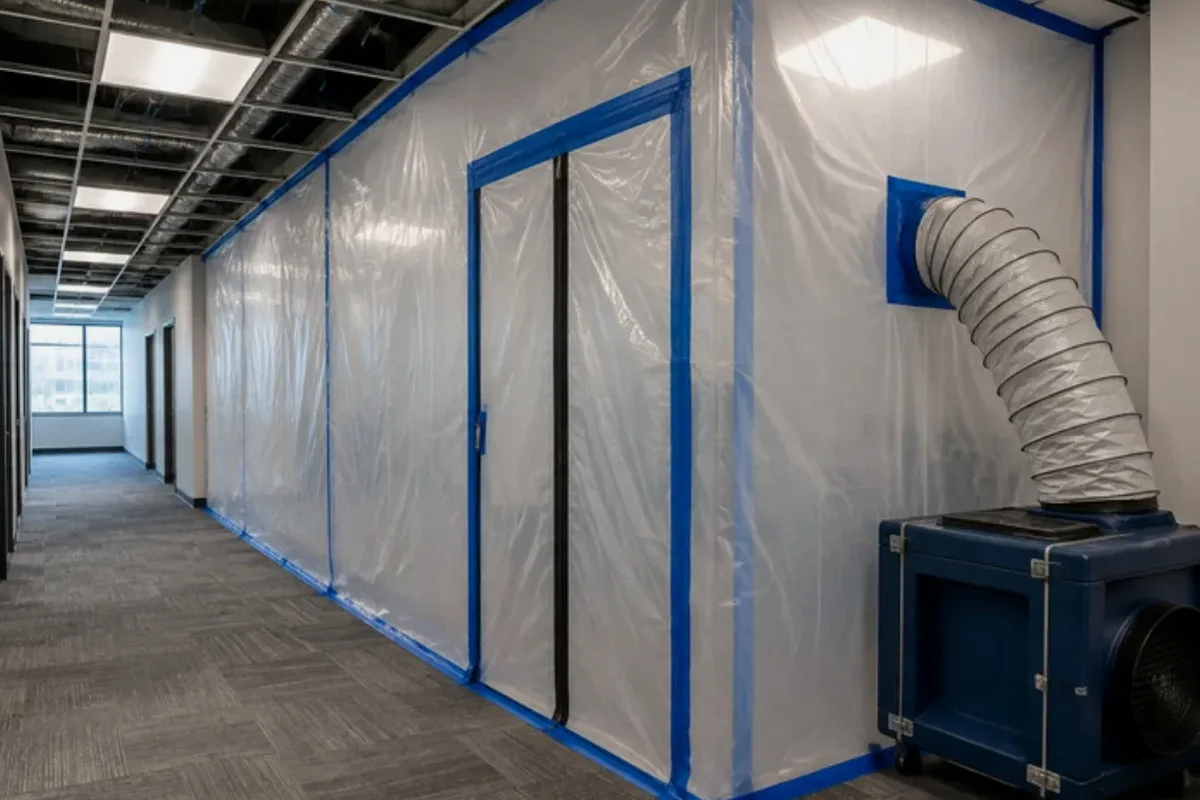
Commercial mold work differs from a house job because the building keeps operating around it. Companies use containment, negative air and a written scope so work areas stay separate from occupied space. Call the number on this page to be connected with a local mold company in Westminster.
Documenting before cleanup
- Dated photos from several angles
- Notes on the water event
- Names of anyone you notified
- Moisture readings if available
These records help with owner, tenant and any insurance conversations later on. Take photos before anything is moved, since cleanup changes what the space looks like.
Slab and foundation moisture
Expansive clay soils along the Front Range can shift slabs and crack foundation walls. Water from irrigation, downspouts or snowmelt then moves toward lower levels. Below-grade storage, mechanical rooms and finished basement suites are the usual places to find damp drywall and floor coverings.
Permits, rentals and contractor checks in Westminster
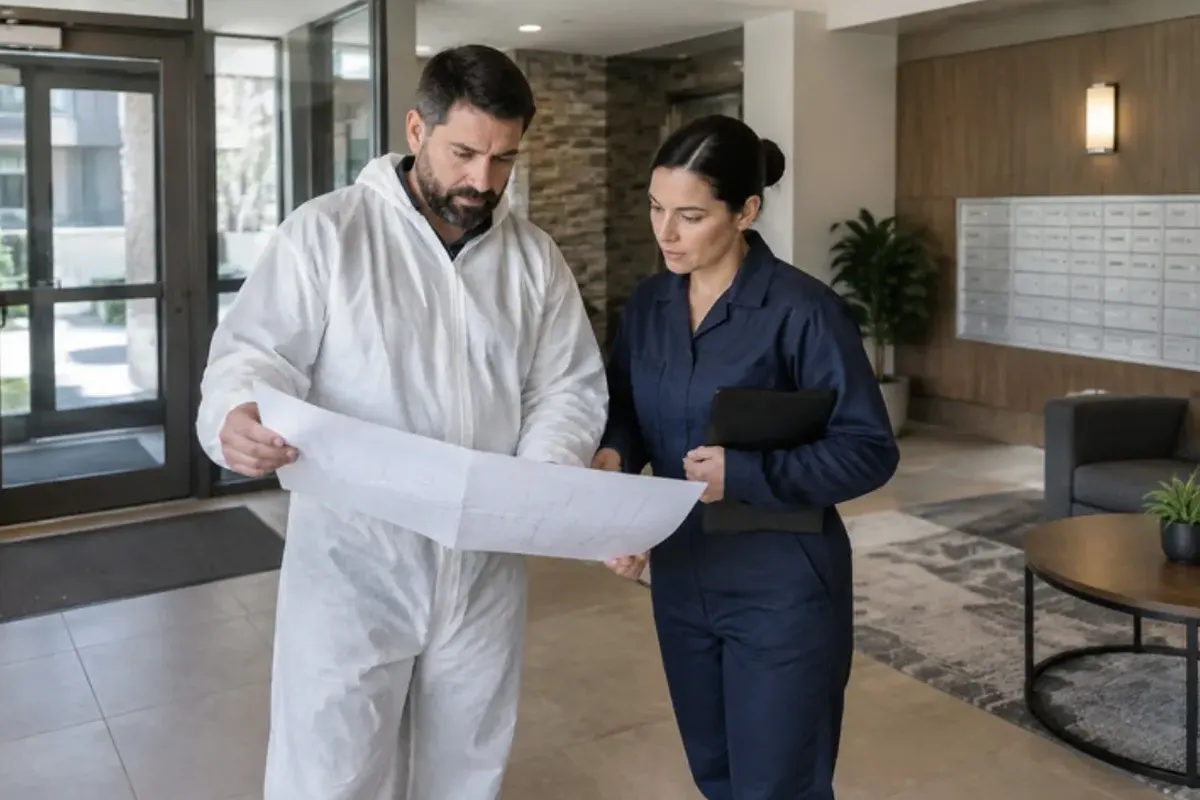
Since there's no state mold license in Colorado, compare companies on their written scope, how they set up containment and whether they hold the local contractor license your jurisdiction asks for.
Remediation itself is cleanup, but putting the room back together can be permitted work; ask the contractor whether the Westminster Building Division needs to be involved.
Renting? Colorado's warranty of habitability counts mold associated with dampness as a condition a landlord must fix after written notice; Colorado Legal Services says action should start within 24 hours for urgent problems.
Calls from Westminster are often matched with companies that also cover Broomfield, Thornton and Louisville.
What drives the price
Cost follows the affected area, the type of materials, how deep the moisture goes and how much of the building must be sealed off. A single ceiling bay differs sharply from a full suite or a whole floor. Ask for a written scope that lists each phase, not just a total.
Debris and disposal
Removed ceiling tile, drywall and carpet are normally bagged or wrapped in the work area before moving out through a planned route. Ask how waste will leave the building, and whether elevators, loading docks or stairwells are being protected along the way. A planned route keeps debris away from customers and other tenants.
Treat water as the emergency
In a commercial space, the clock starts when something gets wet. EPA advises drying wet materials within 24 to 48 hours. Shut off the supply, move inventory, run fans and dehumidifiers, and call a local company if ceiling tile or carpet stays damp past that window.
Commercial Mold Remediation questions in Westminster
Who is responsible for mold in a leased space?
Can we stay open during mold work?
How long will the work take?
Can a small area be handled in-house?
More mold services in Westminster
Commercial Mold Remediation nearby
Helpful guides
Sources
Last updated: