EPA says porous materials that stay moldy usually have to be removed, and that applies to ceiling tile, carpet and insulation in commercial spaces too. A local company can sort out what stays and what goes. Call the number on this page to be connected with a local mold company in Central City.
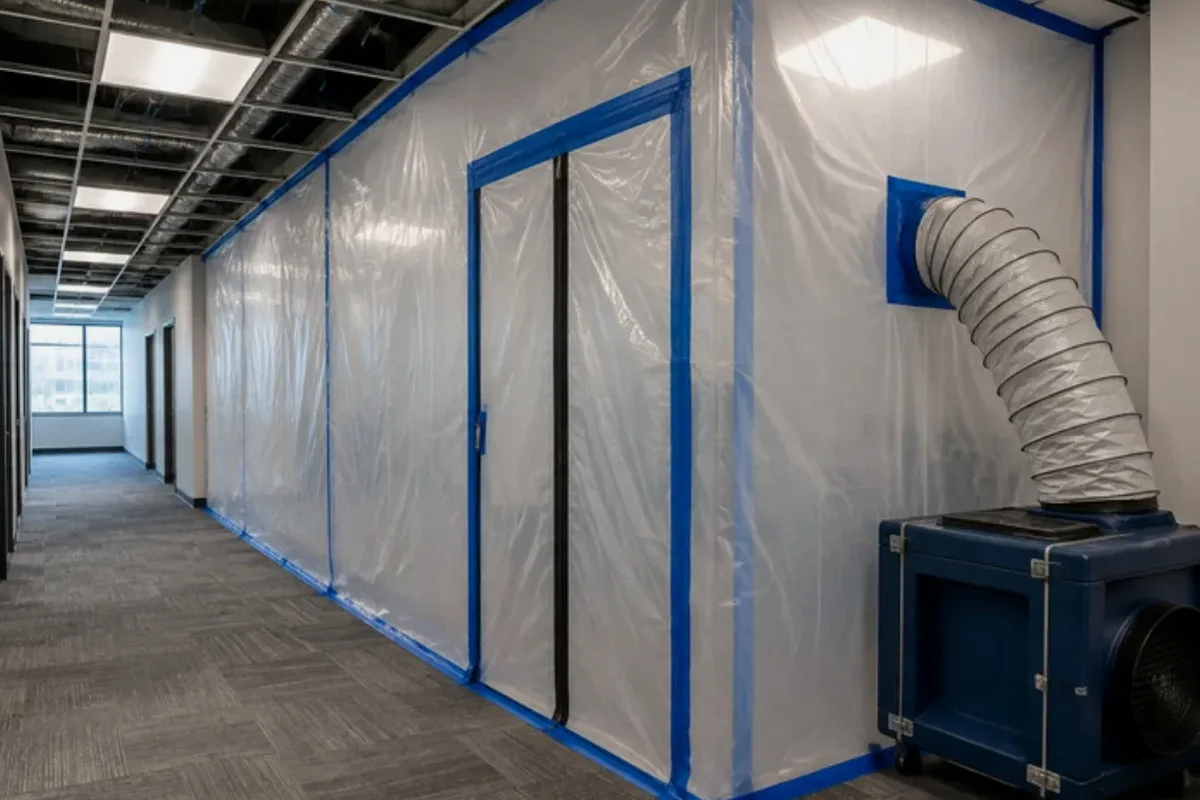
The quiet places
Mold in commercial buildings often hides above drop ceilings, inside plumbing chases, behind vinyl wall covering and under flooring in back rooms. A visible spot may be only the edge of it. Companies use moisture meters and small inspection openings to see how far damp materials extend before they quote.
Tenant build-outs
Remodels sometimes bury old moisture under new finish. Vinyl wallcovering, tight cabinetry and new flooring can trap dampness against drywall. If a suite was recently renovated and a smell followed, ask the company to check behind the new materials, not just the visible surface. Ask for the findings in plain language you can pass to your own manager or landlord.
Mountain commercial buildings often face steep roofs, drifting snow and private wells and limited utilities, and distance from services can make early photos and clear descriptions especially useful.
Materials and access
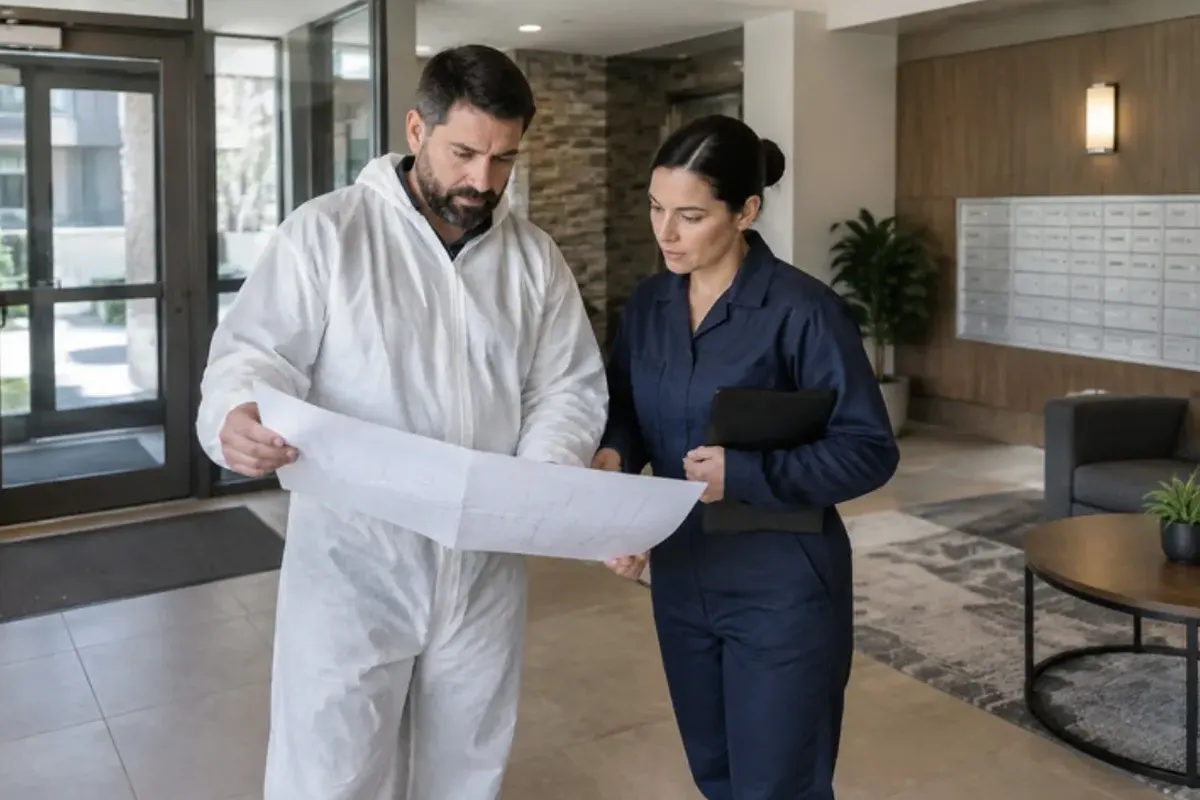
Drop ceiling tile comes out easily, while plaster, fireproofed assemblies, concrete block and wet insulation take more time. Lifts, scaffolding, restricted hours and security protocols also add to labor, and so does a long haul from the loading area. Photos and a floor plan help companies give a closer estimate before the site visit.
Local details for Central City
The state doesn't regulate mold remediation as a separate trade. Contractor licensing comes from the city or county, so a company working across the metro may hold several local licenses.
Remediation itself is cleanup, but putting the room back together can be permitted work; ask the contractor whether the Central City building official needs to be involved.
Renting? Colorado's warranty of habitability counts mold associated with dampness as a condition a landlord must fix after written notice; Colorado Legal Services says action should start within 24 hours for urgent problems.
Nearby, the same kind of help is available in Arvada, Black Hawk and Idaho Springs.
Written protocol
For anything beyond a small area, a written protocol keeps everyone on the same page. It should describe containment, removal methods, drying goals, waste handling and what counts as finished. Share it with tenants, staff and the property manager so nobody is surprised, and keep a signed copy with the building records.
Storage habits
Keep stock and paper goods off floors and several inches away from exterior walls, especially in basement or warehouse spaces. Airflow behind shelving matters. Cardboard is among the first materials to show growth when a floor gets wet, and it can hide a slow leak behind it for months.
Commercial Mold Remediation questions in Central City
Who is responsible for mold in a leased space?
Do we need a written protocol?
How do we handle tenant concerns?
Can a small area be handled in-house?
More mold services in Central City
Commercial Mold Remediation nearby
Helpful guides
Sources
Last updated: