Start by stopping the water and documenting what you see with dated photos. Then a local company can walk the space, check nearby walls and ceilings, and explain what removal, drying and rebuild would involve. Call the number on this page to be connected with a local mold company in Arvada.
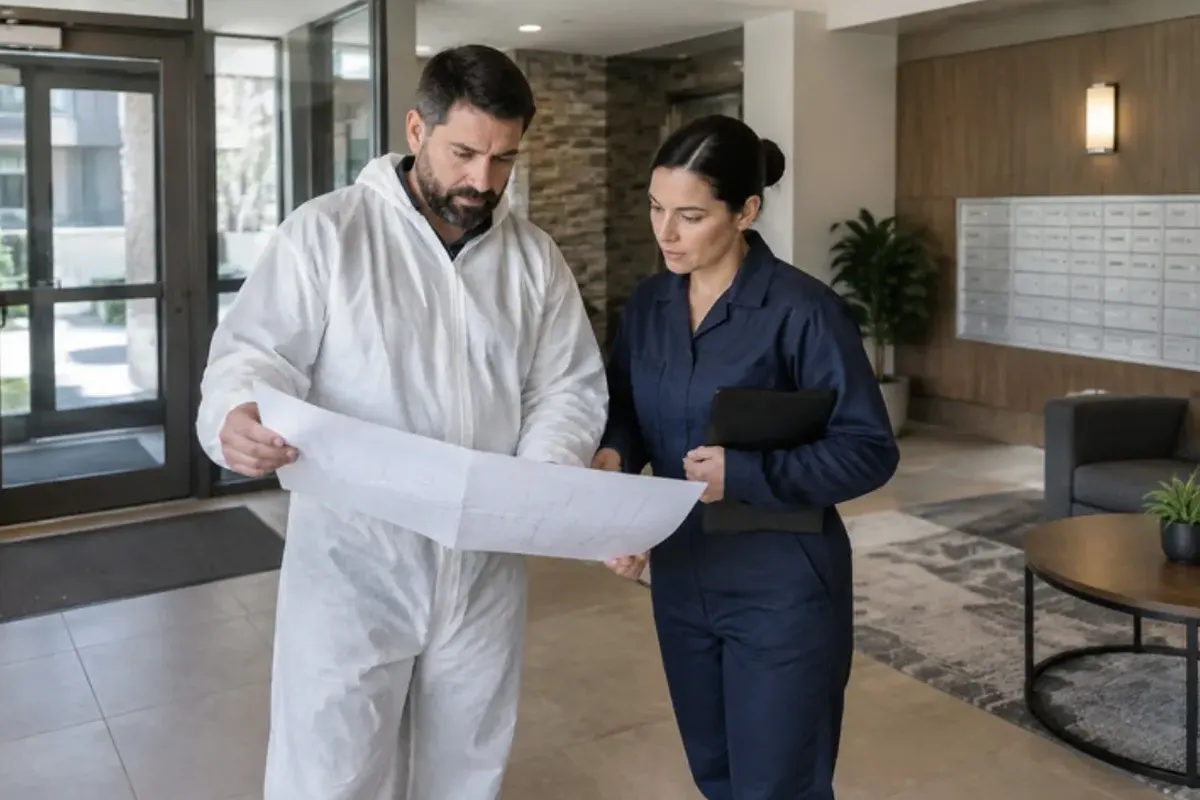
Do not wait on a growing problem
EPA advises drying wet materials within 24 to 48 hours. A commercial space with wet carpet or ceiling tile past that window is more likely to need removal rather than drying. If the water source is stopped but materials are still damp, call sooner rather than later.
Rooftop units and condensate
Rooftop HVAC units and split systems produce condensate that needs a clear path out. A plugged drain pan or a cracked line wets insulation and ceiling tile below. Swamp coolers on older commercial buildings add their own seasonal moisture and need proper shutdown before cold weather arrives each fall.
Much of Arvada's building stock dates to the 1970s, and older flat roofs, aging drain lines and original plumbing chases are common places for slow leaks that feed mold.
Comparing bids
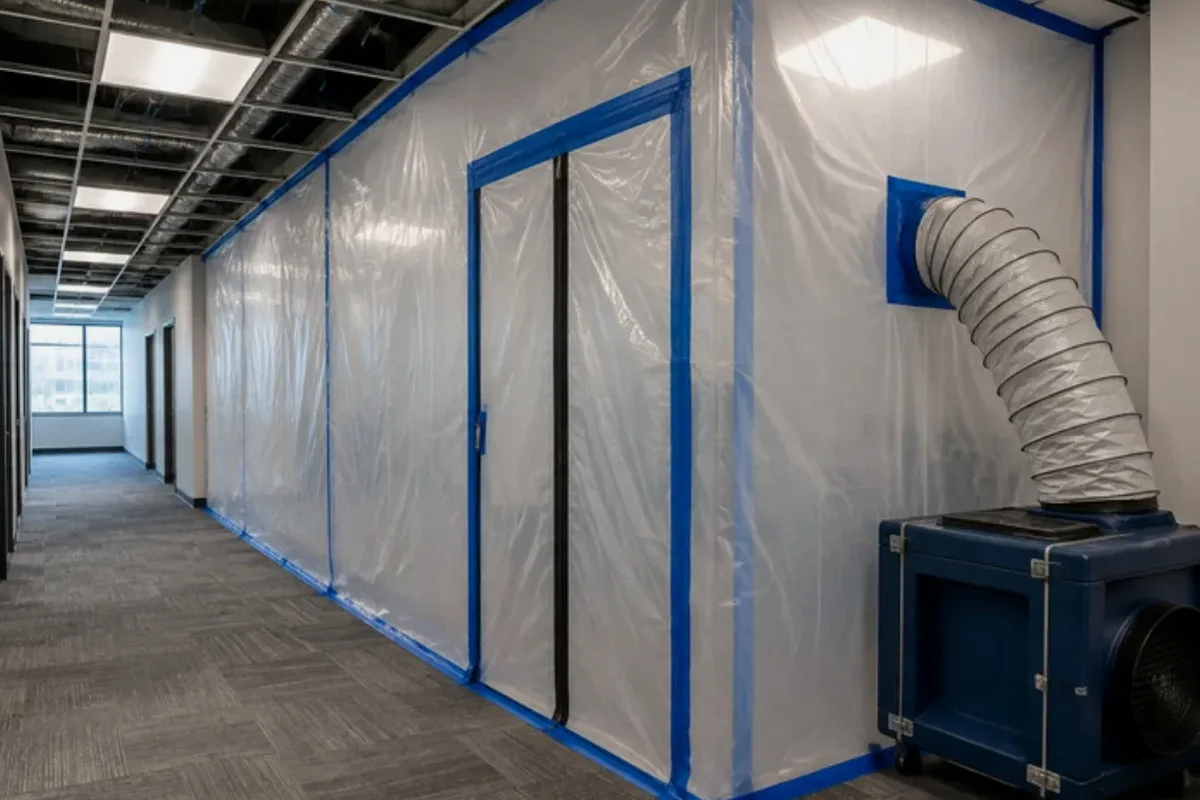
Two bids can differ widely because one lists containment, disposal and drying while another omits them. Line up area, materials, after-hours work, source repair and rebuild. A short written scope from each company lets you compare on equal terms, and exposes anything left out. It is a small step that heads off larger arguments later.
Communicating with occupants
Tenants and staff usually want to know what is happening, where, and for how long, and they ask quickly. A short notice describing the work area and general schedule avoids rumors. If anyone has health concerns, they should talk with their own doctor, not with the contractor.
Treat water as the emergency
In a commercial space, the clock starts when something gets wet. EPA advises drying wet materials within 24 to 48 hours. Shut off the supply, move inventory, run fans and dehumidifiers, and call a local company if ceiling tile or carpet stays damp past that window.
Useful local contacts for Arvada
There is no Colorado mold license to look up. Cities run their own contractor licensing (Denver, for example, issues its own and doesn't accept other jurisdictions' licenses), so ask which one applies to your address.
Remediation itself is cleanup, but putting the room back together can be permitted work; ask the contractor whether the Arvada Building Services needs to be involved.
If you rent, give the landlord written notice of the leak or mold. Colorado's habitability law covers mold tied to dampness, and Colorado Legal Services explains the response times.
Calls from Arvada are often matched with companies that also cover Eldorado Springs, Golden and Wheat Ridge.
Around Arvada
Calls come in from across Arvada, including around Olde Town Arvada, Wadsworth Boulevard, Ralston Road.
Expansive clay soils are common along the Front Range, and cracked basement floor slabs are one of the usual signs of swelling ground.
Commercial Mold Remediation questions in Arvada
How is commercial mold remediation different from a house job?
Should we test the air before remediation?
What documents should we keep?
Does a dry Colorado climate mean mold is unlikely?
More mold services in Arvada
Commercial Mold Remediation nearby
Helpful guides
Sources
Last updated: