Start by stopping the water and documenting what you see with dated photos. Then a local company can walk the space, check nearby walls and ceilings, and explain what removal, drying and rebuild would involve. Call the number on this page to be connected with a local mold company in Longmont.
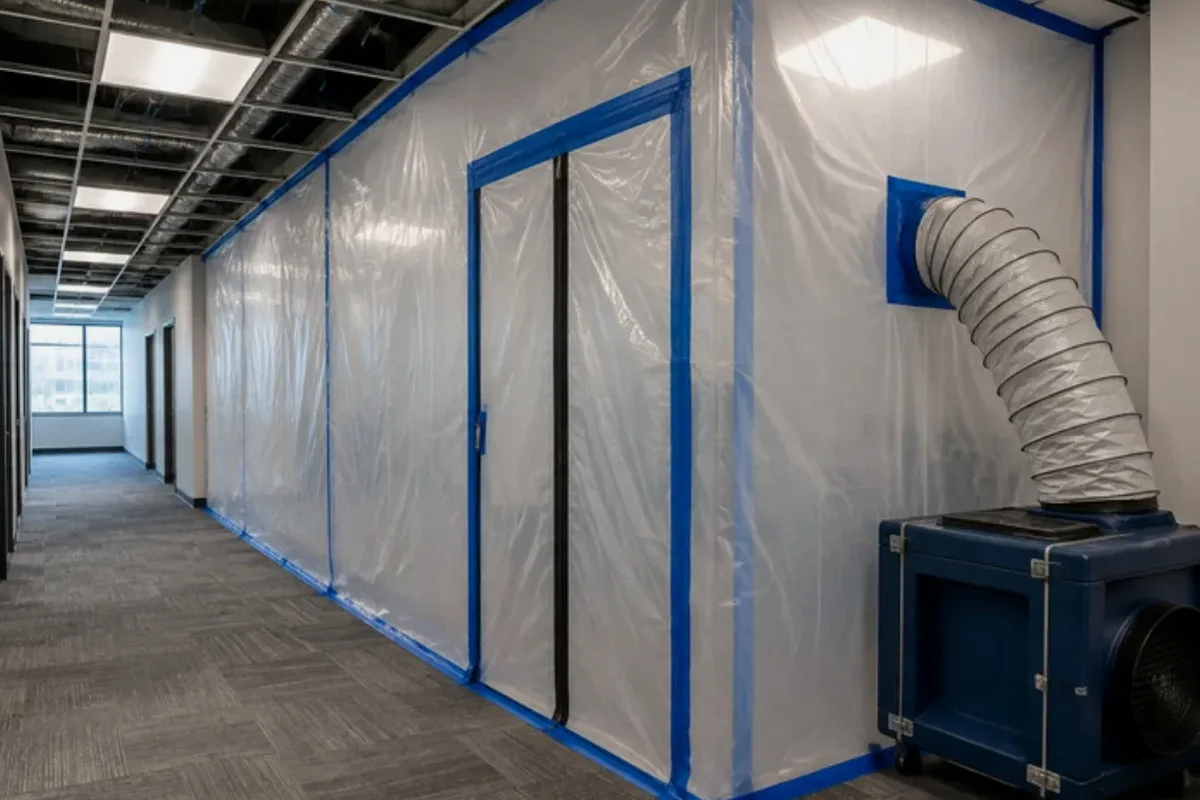
The quiet places
Mold in commercial buildings often hides above drop ceilings, inside plumbing chases, behind vinyl wall covering and under flooring in back rooms. A visible spot may be only the edge of it. Companies use moisture meters and small inspection openings to see how far damp materials extend before they quote.
Kitchens and restrooms
Restaurants and multi-tenant restrooms deal with steady water. Leaking supply stops, failed wax seals, dishwasher splash and grease-trap areas can wet walls and floor edges daily. Mold may appear behind coving, wall tile and equipment that was never moved during routine cleaning, so a good scope includes pulling a few items out.
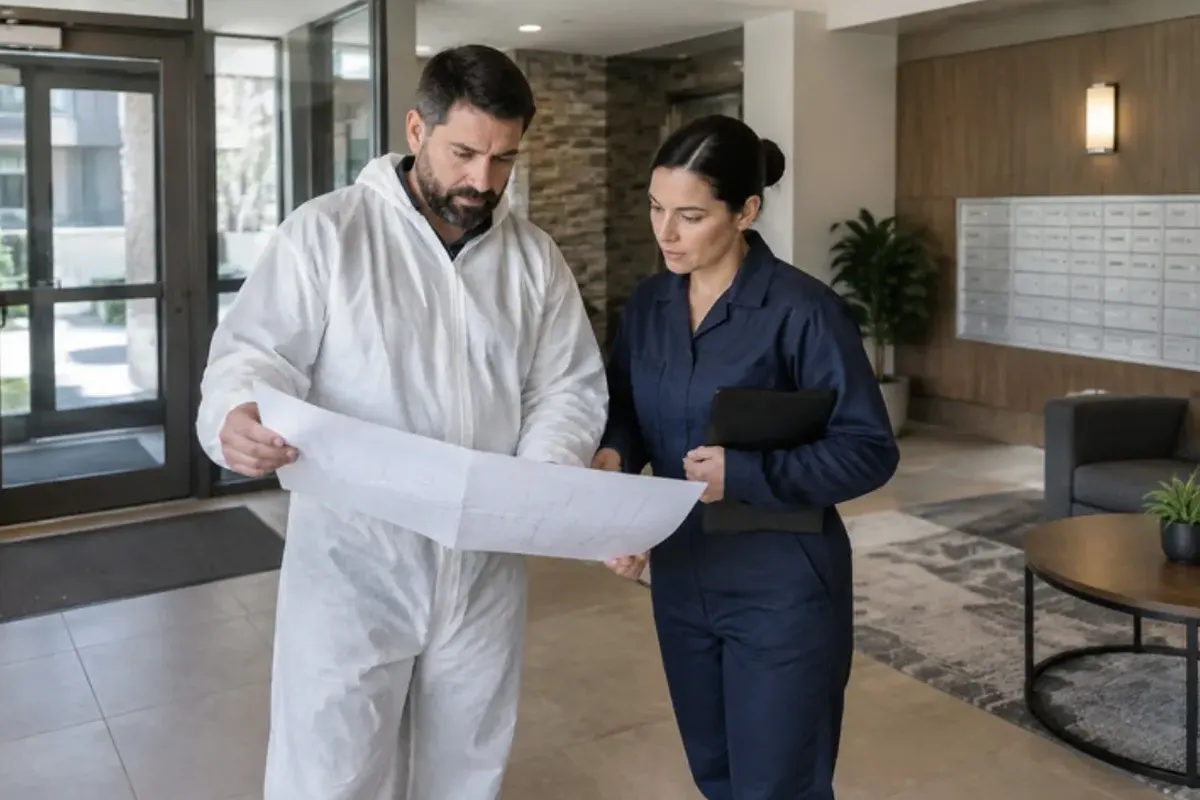
Source repair
Removing mold without fixing the roof, line or drain that fed it invites a return visit. Some companies coordinate with roofers or plumbers, while others leave it to you. Ask who owns that step and whether its cost is inside or outside the quote. The answer shapes who needs to be at the walk-through and who signs off.
Permits, rentals and contractor checks in Longmont
Mold work in Colorado isn't covered by a state mold credential. Any repairs after cleanup fall under local contractor rules, which differ from one city to the next.
Remediation itself is cleanup, but putting the room back together can be permitted work; ask the contractor whether the Longmont Building Inspection Division needs to be involved.
Tenants should report mold to the landlord in writing first; Colorado law treats mold associated with dampness as a habitability issue, with set response times after notice.
Calls from Longmont are often matched with companies that also cover Frederick, Firestone and Erie.
Finish and handoff
When removal and drying are done, expect a visual check, HEPA vacuuming and wipe-down of the work area. An independent assessor can then verify the result if the owner wants it. Keep the scope, photos and any clearance paperwork in the building file, and note which tenants were told and when.
Maintain roof and drains
Clear leaves, grit and ice from roof drains before storms and after thaws. Have a roofer check seams around units, skylights and parapets. A small, early repair at a flashing is far easier than replacing wet insulation and ceiling grid later. Ask for the findings in plain language you can pass to your own manager or landlord.
Longmont at a glance
Calls come in from across Longmont, including around U.S. Highway 287 (Main Street), State Highway 119, Downtown Main Street.
Longmont provides a floodplain inquiry map for checking an address along St. Vrain Creek and Left Hand Creek, and the city notes that anyone can buy flood insurance even outside the mapped floodplain.
Commercial Mold Remediation questions in Longmont
What happens to ceiling tile and carpet?
Does a dry Colorado climate mean mold is unlikely?
What humidity should a commercial space aim for?
Can a small area be handled in-house?
More mold services in Longmont
Commercial Mold Remediation nearby
Helpful guides
Sources
Last updated: