Plywood or oriented strand board sheathing with dark patches can often be cleaned if the wood is still sound, while insulation that stays moldy generally has to be removed. Moisture control matters most. Call the number on this page to be connected with a local mold company in Longmont.
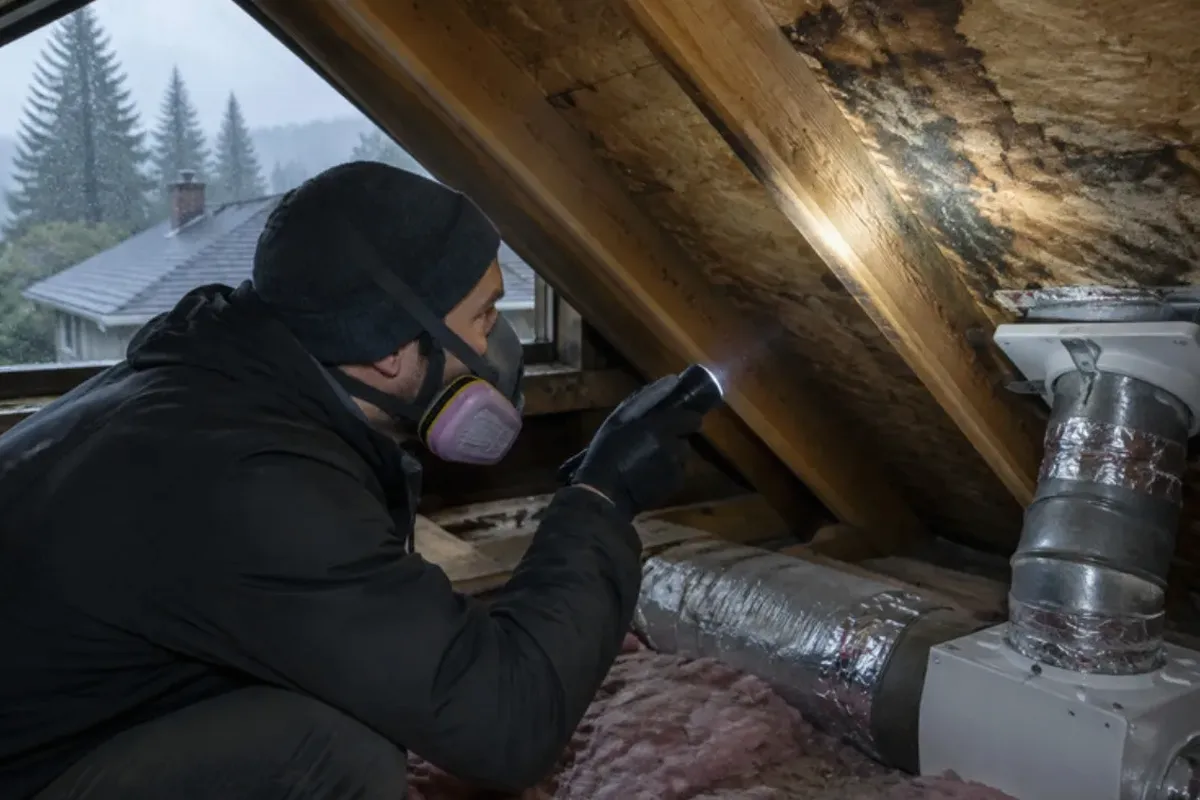
Insulation tells the truth
Dry fluffy insulation holds its shape. Wet insulation looks flattened, stained or clumped, and may feel heavy. Wet spots beside a vent, a chimney or the eaves reveal where moisture is entering, which is information a company wants before it plans cleanup. Notice which spots feel wet.
Snow load and slow leaks
Heavy snow sits for days and presses on shingles, flashing and vent boots. Water finds worn flashing around chimneys, skylights and plumbing vents. A small leak into a cold attic can soak insulation and decking out of sight long before a ceiling stain shows. Cold weather worsens it.
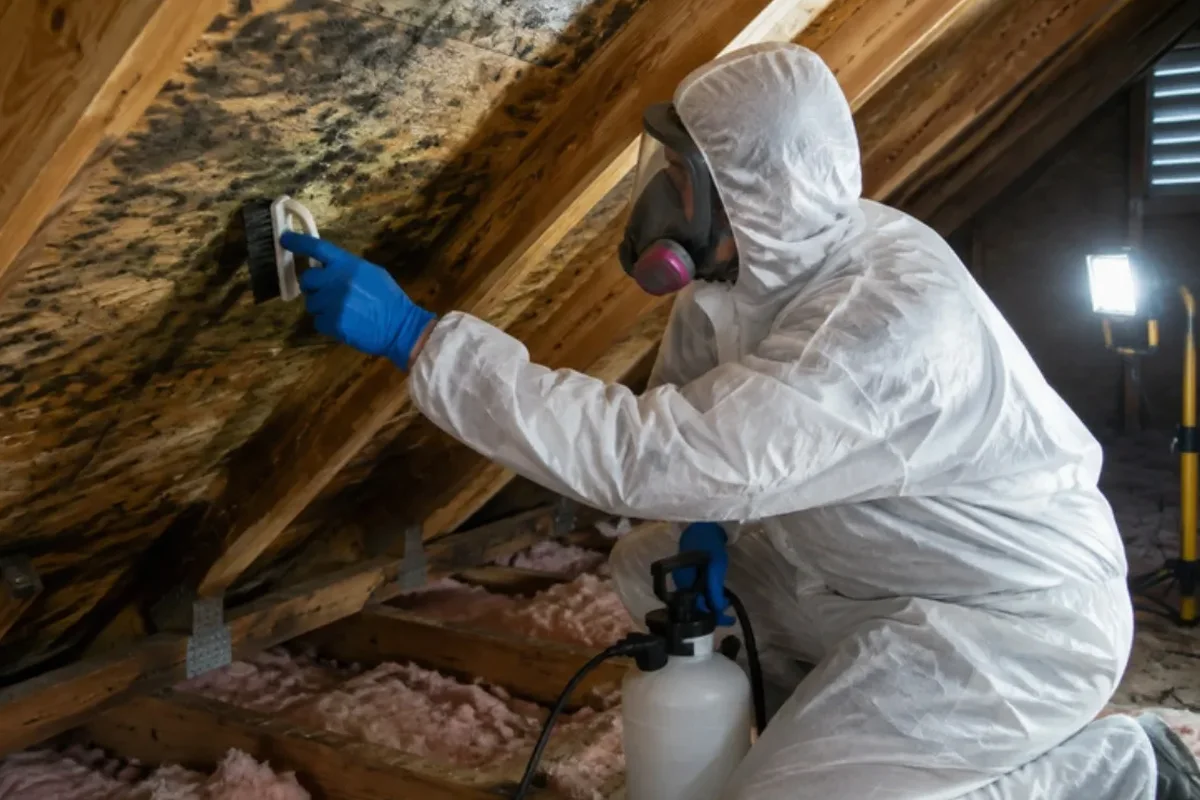
Winter or summer
Attic work in January means cold conditions and frost, and in July heat limits working hours. Either can change scheduling and pace. Many companies have preferred seasons, so ask about timing and whether a minor delay would save effort without letting the problem grow. Check both ends.
Useful local contacts for Longmont
Mold work in Colorado isn't covered by a state mold credential. Any repairs after cleanup fall under local contractor rules, which differ from one city to the next.
Remediation itself is cleanup, but putting the room back together can be permitted work; ask the contractor whether the Longmont Building Inspection Division needs to be involved.
Tenants should report mold to the landlord in writing first; Colorado law treats mold associated with dampness as a habitability issue, with set response times after notice.
Nearby, the same kind of help is available in Frederick, Firestone and Erie.
Questions to ask
- Where is the moisture coming from?
- Will insulation be removed, and how much?
- How will dust stay out of the living space?
- Who fixes the vents and fans?
Specific answers make comparing companies much easier. A good company explains why it cut where it did, so the plan matches.
Duct every fan outside
The most useful single fix in many older homes is running the bathroom and kitchen exhausts through the roof or a wall to the outdoors, with a tight, insulated duct. A fan that ends in the attic keeps feeding moisture into the cold space all winter.
Longmont at a glance
Calls come in from across Longmont, including around U.S. Highway 287 (Main Street), State Highway 119, Downtown Main Street.
Longmont provides a floodplain inquiry map for checking an address along St. Vrain Creek and Left Hand Creek, and the city notes that anyone can buy flood insurance even outside the mapped floodplain.
Attic Mold Removal questions in Longmont
Why does a dry climate still get attic mold?
Does the insulation have to go?
Will the roof need to be replaced?
What are ice dams and why do they cause mold?
More mold services in Longmont
Attic Mold Removal nearby
Helpful guides
Sources
Last updated: