Who pays and who hires often depends on the lease, so check whether the owner or the tenant is responsible before work starts. Either party can ask a local company to scope the problem. Call the number on this page to be connected with a local mold company in Englewood.
Tenant or owner first?
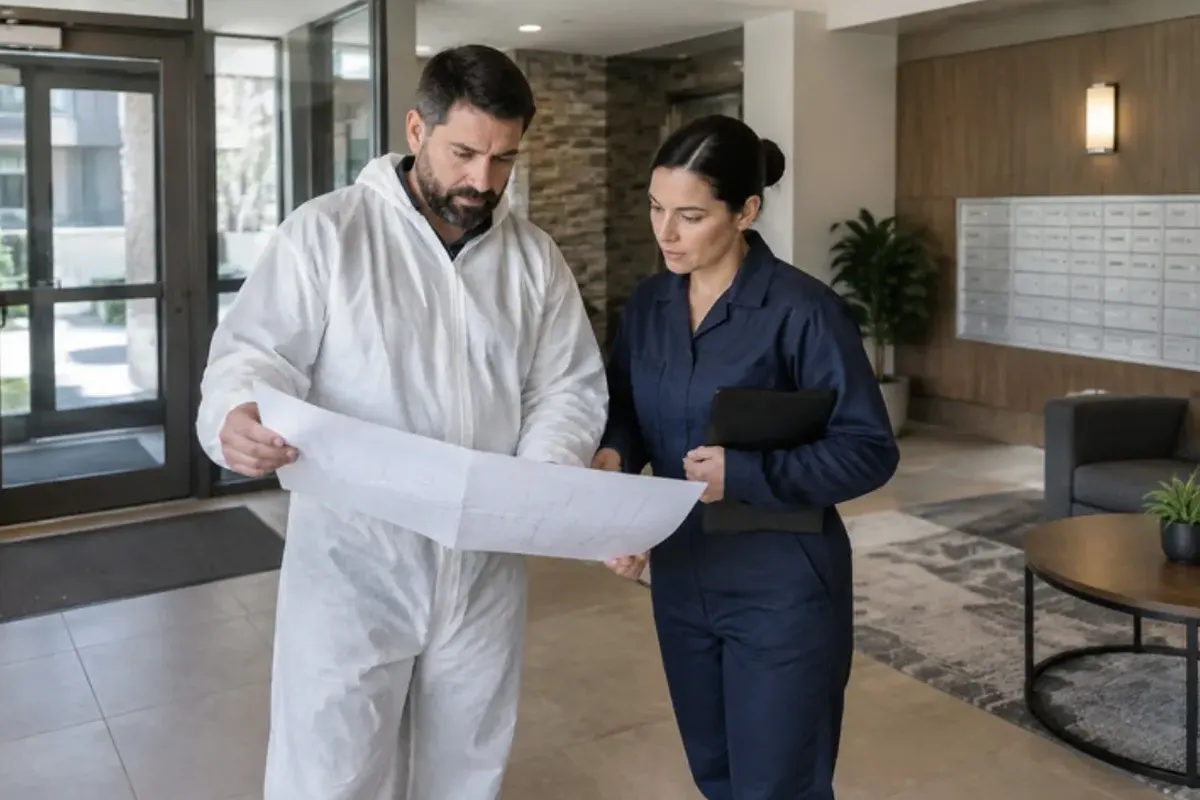
The first call depends on the lease. In many arrangements the owner handles structure and shared systems, while the tenant handles the interior of the suite. Notify the right party in writing, keep copies and avoid starting removal before roles are clear, since disputes over who authorized work can drag on.
Kitchens and restrooms
Restaurants and multi-tenant restrooms deal with steady water. Leaking supply stops, failed wax seals, dishwasher splash and grease-trap areas can wet walls and floor edges daily. Mold may appear behind coving, wall tile and equipment that was never moved during routine cleaning, so a good scope includes pulling a few items out.
Much of Englewood's building stock dates to the 1960s, and older flat roofs, aging drain lines and original plumbing chases are common places for slow leaks that feed mold.
Working around occupancy
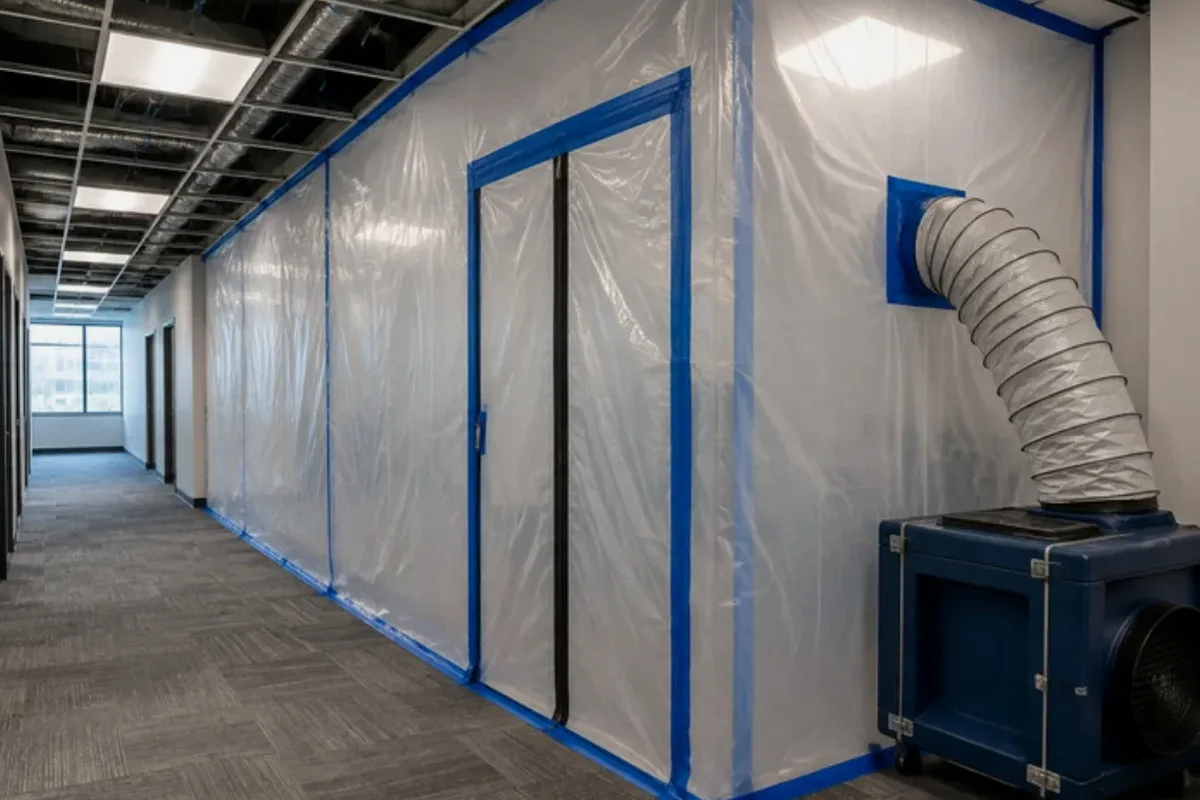
Evening or weekend work can protect operations, but it may change scheduling and labor. A restaurant, clinic or retail store that cannot close affects how the company phases the job. Say what your hours are and what disruption you can tolerate when you ask for quotes. Owners in Englewood often find phasing the work saves more than it costs.
Debris and disposal
Removed ceiling tile, drywall and carpet are normally bagged or wrapped in the work area before moving out through a planned route. Ask how waste will leave the building, and whether elevators, loading docks or stairwells are being protected along the way. A planned route keeps debris away from customers and other tenants.
Storage habits
Keep stock and paper goods off floors and several inches away from exterior walls, especially in basement or warehouse spaces. Airflow behind shelving matters. Cardboard is among the first materials to show growth when a floor gets wet, and it can hide a slow leak behind it for months.
Local details for Englewood
Because the state doesn't certify mold remediation as its own trade, the useful checks are local: whether the company holds the contractor license your city requires, and whether it puts the scope in writing.
The Englewood Building Division handles building permits here, so that's the place to check before walls, cabinets or flooring go back in.
Renting? Colorado's warranty of habitability counts mold associated with dampness as a condition a landlord must fix after written notice; Colorado Legal Services says action should start within 24 hours for urgent problems.
Calls from Englewood are often matched with companies that also cover Littleton, Lone Tree and Louviers.
Around Englewood
Calls come in from across Englewood, including around South Broadway, Hampden Avenue (US 285), CityCenter Englewood.
Expansive clay soils are common along the Front Range, and cracked basement floor slabs are one of the usual signs of swelling ground.
Commercial Mold Remediation questions in Englewood
Who is responsible for mold in a leased space?
Can mold spread through the HVAC system?
How long will the work take?
What humidity should a commercial space aim for?
More mold services in Englewood
Commercial Mold Remediation nearby
Helpful guides
Sources
Last updated: