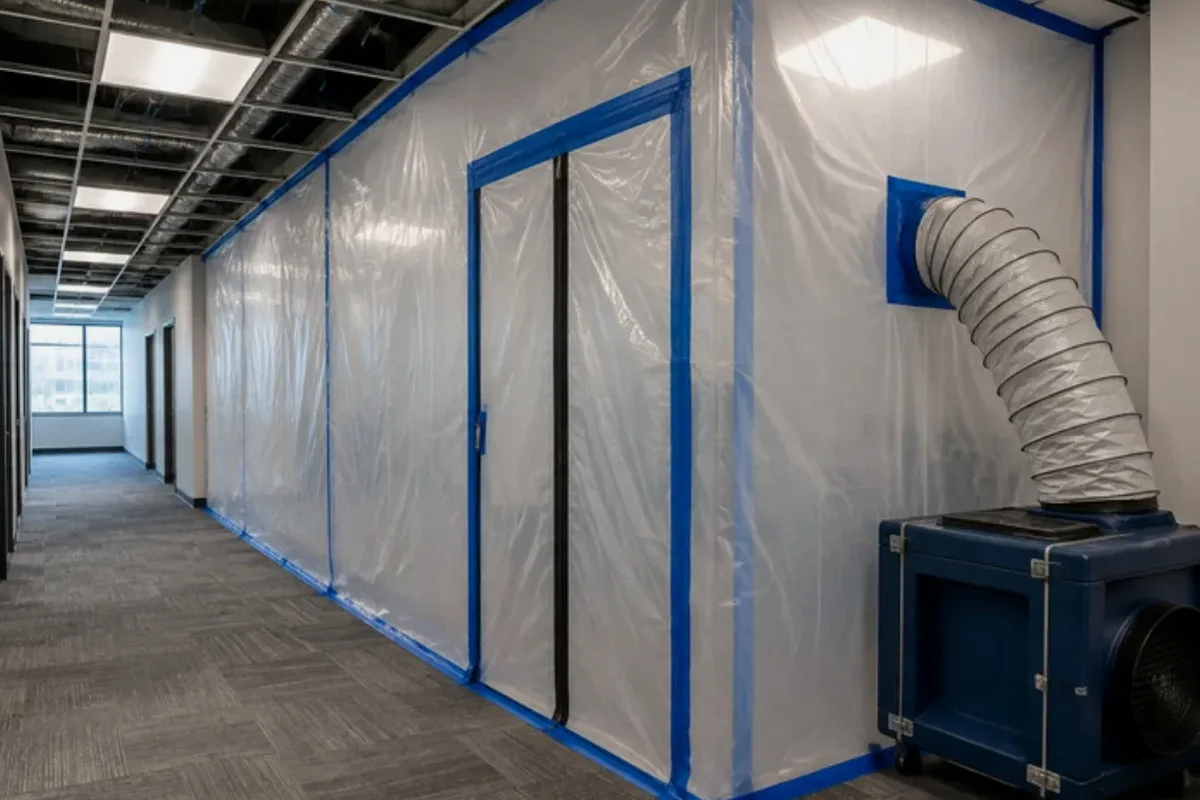
Commercial mold work differs from a house job because the building keeps operating around it. Companies use containment, negative air and a written scope so work areas stay separate from occupied space. Call the number on this page to be connected with a local mold company in Idledale.
Do not wait on a growing problem
EPA advises drying wet materials within 24 to 48 hours. A commercial space with wet carpet or ceiling tile past that window is more likely to need removal rather than drying. If the water source is stopped but materials are still damp, call sooner rather than later.
Shared walls in multifamily buildings
Apartment and condo buildings share plumbing walls, roofs and air paths. A leak in one unit can wet the ceiling of the unit below and the corridor beside it. Managers often need one coordinated scope across several spaces rather than separate fixes.
Foothills and mountain properties such as lodges, shops and short-term rentals face snowmelt, ice dams and long vacancies where small leaks can run unnoticed for weeks.
Source repair
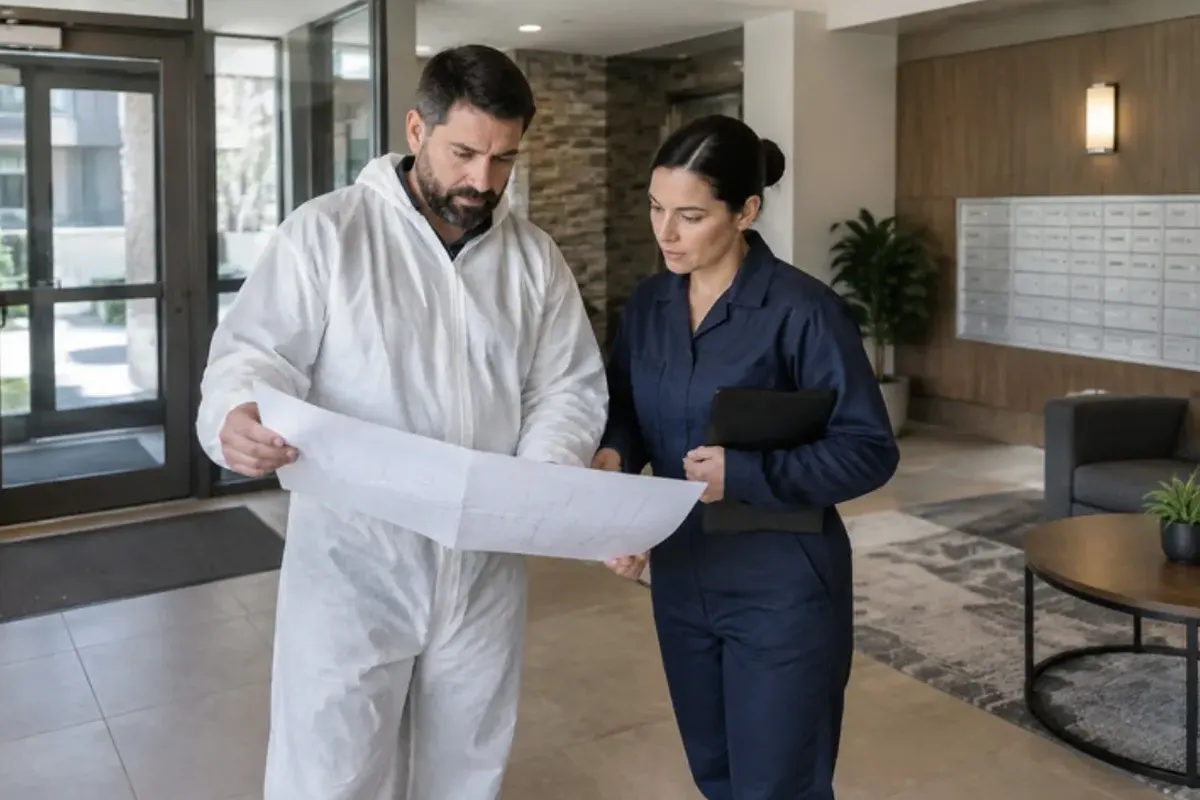
Removing mold without fixing the roof, line or drain that fed it invites a return visit. Some companies coordinate with roofers or plumbers, while others leave it to you. Ask who owns that step and whether its cost is inside or outside the quote. The answer shapes who needs to be at the walk-through and who signs off.
Written protocol
For anything beyond a small area, a written protocol keeps everyone on the same page. It should describe containment, removal methods, drying goals, waste handling and what counts as finished. Share it with tenants, staff and the property manager so nobody is surprised, and keep a signed copy with the building records.
Keep humidity in range
EPA advises keeping indoor humidity below about 60 percent, ideally between 30 and 50. In a dry climate, the main risks are indoor sources: humidifiers, cooling equipment, kitchens, restrooms and poorly ventilated storage. A few small sensors in storage rooms and mechanical spaces can flag a problem early.
Who handles what in Idledale
There is no Colorado mold license to look up. Cities run their own contractor licensing (Denver, for example, issues its own and doesn't accept other jurisdictions' licenses), so ask which one applies to your address.
Remediation itself is cleanup, but putting the room back together can be permitted work; ask the contractor whether the Jefferson County Building Safety needs to be involved.
If you rent, give the landlord written notice of the leak or mold. Colorado's habitability law covers mold tied to dampness, and Colorado Legal Services explains the response times.
Calls from Idledale are often matched with companies that also cover Golden, Morrison and Indian Hills.
Commercial Mold Remediation questions in Idledale
Do we need a written protocol?
Can mold spread through the HVAC system?
What documents should we keep?
Can a small area be handled in-house?
More mold services in Idledale
Commercial Mold Remediation nearby
Helpful guides
Sources
Last updated: